
Start with the acquisition classification before allocating value
Purchase price allocation (PPA) in an Australian technology acquisition starts with classification, not a spreadsheet. Under AASB 3, you first determine whether the assets acquired and liabilities assumed constitute a business. If they do, the acquisition method applies. If they do not, the transaction is accounted for as an asset acquisition.
That fork changes what the allocation needs to establish. A business combination involves identifying the acquirer and acquisition date, recognising and measuring identifiable assets and liabilities, considering any non-controlling interest, and recognising goodwill or a bargain-purchase gain. An asset acquisition follows a different allocation path: the cost is assigned to identifiable assets and liabilities based on their relative fair values at the purchase date, and the cited AASB 3 passage says that this does not create goodwill.
For a technology deal, the practical implication is direct: classify the acquired set before deciding which technology, intellectual property, AI-related assets, data or other intangibles need separate analysis. Build the evidence trail in this order:
- classify the transaction;
- identify the acquired assets and assumed liabilities;
- determine which items require separate recognition or measurement;
- connect each value to documentation and valuation analysis; and
- carry the result into financial reporting.
The applicable standard requirements, transaction date and facts still need to be assessed for the specific acquisition. Use this checklist to organise the discussion with your accounting, tax, legal and valuation advisers.
Overview
Purchase price allocation is the process of assigning the purchase price of a business to individual assets and liabilities at fair value, with any remaining amount recorded as goodwill. In an Australian technology acquisition, the work therefore connects the transaction price with the assets and obligations that explain what you acquired.
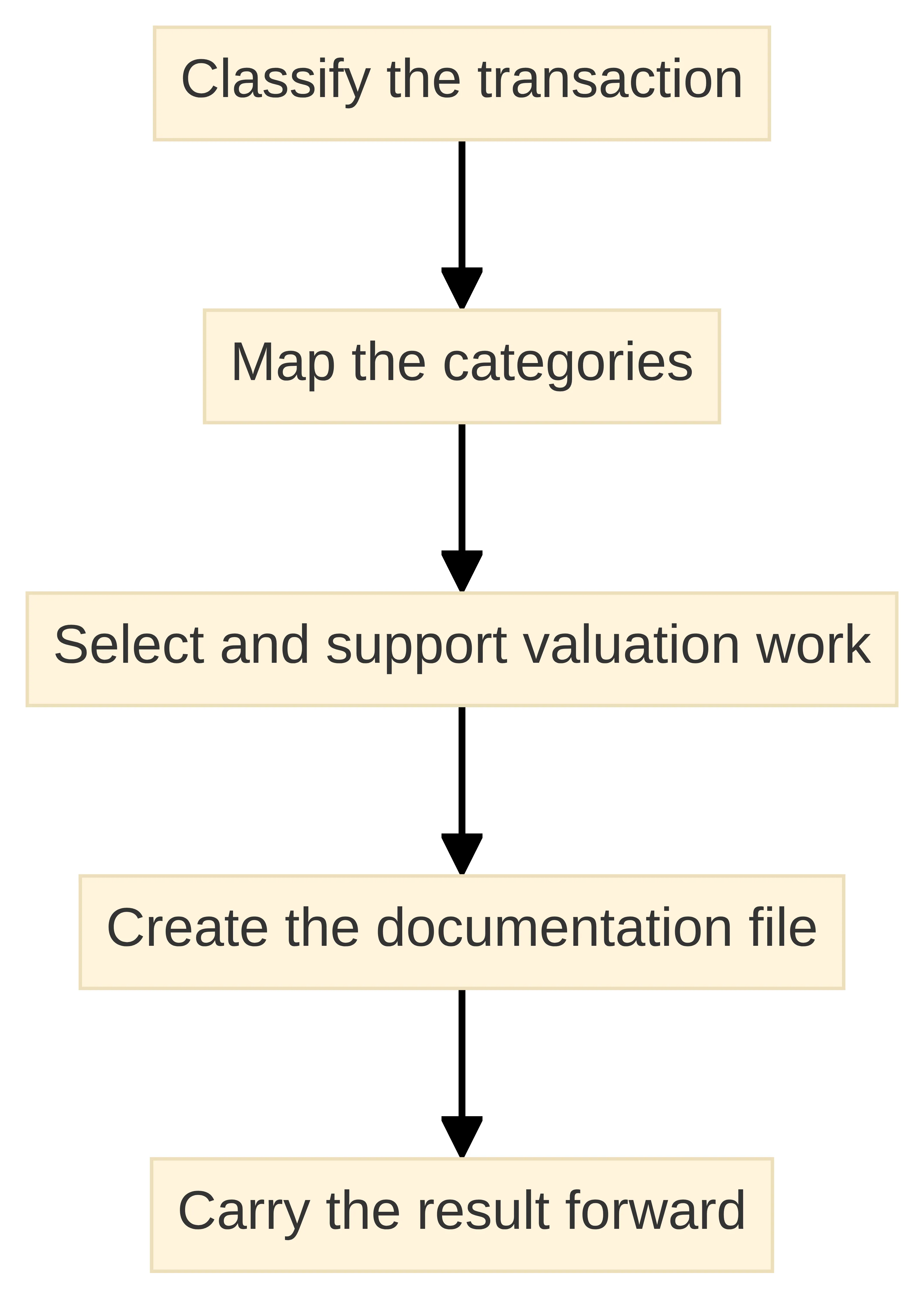
The checklist has five linked stages:
- Classify the transaction. Establish whether the acquired set is a business or an asset acquisition under the applicable Australian requirements.
- Map the categories. Separate identifiable tangible assets, identifiable intangible assets, liabilities and, where the business-combination path applies, goodwill or a bargain-purchase result.
- Select and support valuation work. Match each material value driver to rights, financial information, forecasts, transaction terms and an appropriate valuation analysis.
- Create the documentation file. Make the allocation traceable from the purchase agreement through to the accounting entry.
- Carry the result forward. Consider how the allocated values affect subsequent financial reporting, amortisation and impairment analysis.
The allocation is not a substitute for accounting, tax or legal advice. It is a structured way to give those advisers the same transaction facts, asset map and valuation record.
Define what the purchase price allocation must establish
A defensible PPA must establish what consideration was transferred, which identifiable assets and liabilities belong in the allocation, how those items are measured, and what amount remains after the recognised items are considered. The accepted PPA definition describes allocation to individual assets and liabilities at fair value, with any remaining amount recorded as goodwill.
For a business combination, the acquisition method also requires a clear record of:
- the entity that obtained control and is treated as the acquirer;
- the acquisition date;
- identifiable assets acquired;
- liabilities assumed;
- any non-controlling interest; and
- goodwill or a gain from a bargain purchase.
Those categories should not be treated as labels added after the valuation. They are the structure that determines what the valuation work is trying to measure. A negotiated headline price is an input to analyse; it does not, by itself, determine the value assigned to every asset or liability.
The asset-acquisition path is narrower. Where the acquired set is not a business, the cited AASB 3 passage directs the cost of the group to identifiable assets and liabilities according to their relative fair values at the purchase date. It also says that the transaction does not give rise to goodwill under that passage. The accounting adviser should document why the classification applies before the allocation is finalised.
A useful opening question is: What must the financial statements show about this acquisition, and which transaction facts support each amount? That question keeps the exercise tied to recognition, measurement and reporting rather than to an unsupported residual.
Apply the business-combination path under the acquisition method
The business-combination path applies the acquisition method when the acquired assets and liabilities constitute a business under the applicable requirements.
The acquisition date matters because the allocation is tied to the transaction at that date. The acquirer also classifies or designates acquired assets and assumed liabilities as needed to apply other Australian Accounting Standards afterward. That classification work should be visible in the accounting file, rather than left as an unexplained conclusion in the final journal entry.
The acquisition method can recognise identifiable intangible assets that the target had not previously recognised. The cited AASB 3 material gives a brand name, patent and customer relationship as examples, including internally developed assets where the target had expensed related costs. A target’s standalone balance sheet is therefore not a complete asset map for the acquisition.
For a technology transaction, ask the accounting team to connect each proposed category to the recognition analysis and the acquisition-date measurement. A practical sequence is:
- identify the acquired business and the party obtaining control;
- fix the acquisition date used in the analysis;
- list tangible assets, intangible assets and liabilities acquired;
- identify items that may be recognised even though the target did not record them previously;
- determine whether any non-controlling interest is relevant; and
- calculate the resulting goodwill or bargain-purchase outcome only after the identifiable items have been addressed.
The sequence prevents goodwill from becoming a substitute for investigating technology, intellectual property or customer-related assets.
Apply the asset-acquisition path when the acquired set is not a business
The asset-acquisition path applies when the acquired assets and liabilities do not constitute a business under the applicable requirements. The classification is not a minor variation of the business-combination path: it changes the accounting sequence and the treatment of the residual.
For an asset acquisition, the cited AASB 3 material states that the group’s cost is allocated to the individual identifiable assets and liabilities on the basis of their relative fair values at the purchase date. The same passage says that the transaction does not give rise to goodwill. Do not carry a business-combination residual into this path without an accounting conclusion that supports it.
A technology deal can contain valuable assets without meeting the definition of a business. That possibility makes the first classification question especially useful for acquisitions involving selected software, patents, data, AI-related assets or other rights rather than an operating business. The presence of an attractive technology asset does not, on its own, answer the classification question.
Before commissioning a full allocation, ask the accounting adviser to document:
- what assets and liabilities are being acquired;
- what operating capabilities, if any, are included;
- why the acquired set does or does not constitute a business; and
- how relative fair values will be used to allocate the cost.
Keep the classification memo with the purchase agreement and valuation file. It explains why the allocation follows the asset-acquisition path and gives later reviewers a basis for understanding why goodwill was not recorded under the cited treatment.
Map technology, IP, AI and other intangible assets before valuing them
The technology asset map should precede valuation. The cited AASB 3 material identifies brand names, patents and customer relationships as examples of identifiable intangible assets, and Australian transaction guidance notes that acquired brands, technology, customer relationships and goodwill may not appear on the target’s standalone balance sheet.
For an established technology company, use a candidate map that separates the subject of the analysis from the conclusion about recognition:
- Tangible assets: list the identifiable physical assets acquired and the information needed to measure them.
- Intellectual property: record patents, brands and other rights, together with ownership, registration and transfer information where relevant to the transaction.
- Software and technology: describe the software, platforms or technical assets included in the deal and identify the rights that pass to the acquirer.
- AI-related assets: describe the models, systems, training materials or related technology under review without assuming that every item is a separately recognised asset.
- Data: identify the data sets and associated rights or restrictions that form part of the transaction, then leave recognition and measurement to the applicable accounting analysis.
- Customer-related assets: identify customer relationships or similar assets that may require separate consideration.
- Liabilities: list the liabilities assumed and connect each item to the transaction documents and accounting assessment.
- Residual: consider goodwill only where the business-combination path and the resulting calculation support it.
The distinction between a candidate asset and a recognised asset matters. A description in a data room, a product roadmap or a management presentation is evidence to assess, not an automatic accounting conclusion. The accounting adviser should determine whether an item meets the applicable recognition requirements, while legal advisers address rights and transferability and valuation advisers assess the relevant measurement question.
This map also exposes gaps early. If a technology value driver has no clear owner, contract, registration, technical description or financial support, record the gap and assign it to the adviser responsible for resolving it.
Connect each value driver to evidence and valuation analysis
The valuation analysis should explain how each material value driver connects to an identifiable asset or liability and to the transaction date. A useful valuation file names the asset, defines the interest or rights being measured, states the method used, records the assumptions, and points back to the supporting documents.
The multi-period excess earnings method is an income-approach method commonly used in PPAs, particularly for customer-related intangibles. In the cited explanation, projected net after-tax cash flows for the relevant asset group are adjusted by contributory asset charges, leaving residual excess earnings attributable to the intangible asset. Those charges consider contributing assets such as working capital, fixed assets, other tangible assets and other intangible assets, while excluding goodwill.
That description gives you practical questions for the valuation file:
- What asset or asset group is being valued?
- What cash flows or other evidence relate to that asset?
- Which assets contribute to those cash flows?
- How have the contributory asset charges been identified and supported?
- Which assumptions are supplied by the transaction team, and which are valuation judgements?
- How does the analysis avoid attributing goodwill to a separately valued intangible?
The method should follow the asset and evidence rather than the other way around. A customer-related asset may call for the multi-period excess earnings method, but the cited method description does not decide the method for every technology, IP, AI or data asset. Record the reason for the selected approach and the limitations created by the available evidence.
The valuation report also needs a clear boundary. It can support the measurement analysis, but it does not determine the accounting classification, tax treatment or legal ownership of the asset.
Build the PPA documentation file before relying on the allocation
The PPA documentation file should let an adviser trace the allocation from the transaction terms to the reported amounts. The acquisition method requires a clear record of the acquirer, acquisition date, identifiable assets, liabilities, non-controlling interests and goodwill or a bargain-purchase gain. Build the file around those decisions rather than around a collection of disconnected valuation schedules.
A practical file can include:
- the signed purchase agreement and schedules that define the consideration and acquired set;
- the transaction structure, completion date and acquisition date used for accounting;
- a list of acquired assets and assumed liabilities, with a status for each item;
- the target’s financial statements and relevant management information;
- an IP and technology register covering patents, brands, software, AI-related assets, data and customer-related assets under review;
- ownership, licence, transfer and restriction documents supplied by the transaction team;
- valuation reports, working papers, selected methods, assumptions and sensitivity information;
- the accounting memo explaining business-versus-asset classification and recognition decisions;
- tax and legal questions that remain open, clearly separated from accounting conclusions; and
- the final allocation, journal-entry support and review record.
The file should distinguish facts from assumptions. For example, a purchase agreement can establish what the parties agreed to transfer, while a valuation analysis may estimate the value of an identifiable asset and an accounting memo may decide whether that asset is recognised. Those are related steps, not interchangeable evidence.
A near-year-end acquisition may require valuation input for identifiable assets and consideration before the business-combination journal entry is complete. Starting the file when negotiations begin gives the advisers time to identify missing documents rather than treating the measurement period as a reason to postpone the evidence work.
Carry the allocation into financial reporting and impairment analysis
The financial reporting consequence of a PPA extends beyond the acquisition entry. Australian transaction guidance states that a comprehensive allocation can reflect acquired assets and liabilities—including brands, technology, customer relationships and goodwill—that may not appear on the target’s standalone balance sheet.
The values allocated to intangible assets form the basis for subsequent amortisation and impairment testing, subject to the applicable standards and the characteristics of the assets. That makes the acquisition-date analysis relevant to later reporting, not merely to the first set of post-deal accounts. The accounting adviser should connect each recognised item to its subsequent classification and reporting treatment.
Use a forward-looking reporting handoff with three parts:
- Acquisition-date record: preserve the classification, recognised assets, assumed liabilities, measurement basis and supporting evidence.
- Subsequent-accounting map: record which standards and asset characteristics govern later treatment, including any amortisation or impairment analysis relevant to the recognised intangible assets.
- Monitoring file: identify the assumptions, information and reporting owners that will be needed when subsequent analysis is performed.
Do not treat an impairment conclusion as a simple replay of the original valuation. The PPA provides the acquisition-date values and categories; later analysis depends on the applicable requirements and the facts at that later reporting date. Keep the original assumptions available, but ask the accounting adviser to determine how subsequent reporting applies to the recognised assets and goodwill.
Use the measurement period without postponing the evidence work
The measurement period can provide time to complete fair-value information, but it should not replace early planning. The cited IFRS 3 guidance permits a measurement period of up to one year from the acquisition date, ending sooner once the entity obtains the fair-value information needed to complete business-combination accounting. The applicable Australian adoption and current standard text should be checked for the transaction.
The practical boundary is simple: a measurement period is not permission to leave classification, asset mapping or document collection until the reporting deadline. Start with the information that can change the allocation:
- the business-versus-asset assessment;
- the acquisition date and consideration schedule;
- the list of identifiable assets and liabilities;
- the technology and IP rights that require separate analysis;
- the valuation method and information requirements; and
- the accounting entry and subsequent-reporting questions.
Bring that possibility into the transaction timetable. Give the valuation adviser a defined asset map and give the accounting adviser a clear list of unresolved classification and measurement questions.
Ask each adviser questions that match their responsibility
The adviser questions should follow the allocation rather than repeat the same request to every specialist. The accounting, tax, legal and valuation workstreams address different conclusions, even when they use some of the same transaction documents.
Questions for the accounting adviser
- Do the acquired assets and assumed liabilities constitute a business under the applicable AASB requirements?
- Who is the acquirer, what is the acquisition date, and is any non-controlling interest relevant?
- Which tangible assets, intangible assets and liabilities should be recognised and measured?
- Are there internally developed assets that the target did not previously recognise but that require consideration in the acquisition?
- How will the allocation affect subsequent financial reporting, amortisation and impairment analysis?
Questions for the tax adviser
- Which tax conclusions are separate from the accounting allocation?
- Does the transaction structure change the tax analysis of the assets, liabilities or consideration?
- Which documents and assumptions does the tax work require?
- Where accounting and tax categories differ, how should the difference be documented without changing the accounting allocation?
Questions for the legal adviser
- What exactly transfers under the purchase agreement?
- Who owns or controls the relevant IP, software, AI-related assets, data and customer-related rights?
- Are there licences, consents, restrictions, encumbrances or contractual obligations that affect the acquired rights?
- Which liabilities or obligations are assumed, retained or disputed?
Questions for the valuation adviser
- Which assets require separate valuation analysis and why?
- What rights, dates, financial information and assumptions does each method require?
- Is the multi-period excess earnings method appropriate for any customer-related intangible, and how will contributory asset charges be supported?
- How will the analysis distinguish an identifiable intangible from goodwill?
- What limitations, missing evidence or unresolved assumptions should appear in the report?
The answers should be recorded in the same documentation file. That gives each adviser a common factual base without turning one adviser’s conclusion into another adviser’s conclusion.
Keep accounting, tax, legal and valuation conclusions separate
Accounting, tax, legal and valuation conclusions should remain separate even when they appear in one transaction file. The allocation needs coordination, but coordination does not make the conclusions interchangeable.
- Accounting determines the relevant classification, recognition, measurement and subsequent reporting under the applicable Australian requirements.
- Tax determines the tax treatment and tax consequences for the transaction facts and structure.
- Legal determines what rights, interests, obligations and restrictions are created or transferred by the transaction documents.
- Valuation estimates the value of defined assets, liabilities or interests using an appropriate method and supporting evidence.
The distinction matters for technology acquisitions. A patent, software asset, AI-related system, data set or customer relationship may have a legal description, a valuation question and an accounting treatment that do not match word for word. A valuation report can support measurement without deciding whether the acquired set is a business. A purchase agreement can define transferred rights without deciding their fair value. An accounting conclusion can determine recognition without answering a tax question.
Keep those relationships visible in the file. For each material item, record the legal description, valuation subject, accounting category and open tax question separately. If two workstreams use different terminology, define the terms before combining their schedules.
The same discipline applies to goodwill. The cited AASB 3 material connects goodwill to the business-combination path and its residual calculation, while the cited asset-acquisition passage says that the asset-acquisition treatment does not create goodwill. Do not use a valuation residual to override the transaction classification.
Decide whether specialist valuation support is warranted
Specialist valuation support is worth considering when a technology acquisition contains material IP, AI-related assets, data, software or customer-related intangibles; when separate values are needed for the reporting analysis; when the acquisition date is close to year-end; or when the available evidence and assumptions need a structured valuation record.
Before you proceed, make sure the brief answers four questions:
- Has the transaction been classified as a business combination or asset acquisition?
- Has the asset and liability map separated candidate intangibles from goodwill?
- Can each material value driver be traced to transaction documents and valuation evidence?
- Are accounting, tax, legal and valuation conclusions assigned to the advisers responsible for them?
A qualified accounting, tax or legal professional must determine transaction-specific conclusions; valuation support does not replace those roles. Use a focused brief that identifies the acquisition, the assets under review, the reporting purpose, the available documents and the questions still unresolved.
For an Australian technology acquisition, that preparation gives you a clearer basis for deciding whether specialist valuation input is needed and what the assignment must address.
What should be ready before discussing a technology-acquisition PPA?
What is the purpose of purchase price allocation in an acquisition?
Purchase price allocation (PPA) assigns the purchase price of a business to its individual assets and liabilities at fair value, with any remaining amount recorded as goodwill. This process helps ensure that financial statements accurately reflect the acquired assets and liabilities, including intangible assets that may not appear on the target’s standalone balance sheet.
What categories are typically included in a purchase price allocation?
A purchase price allocation typically includes identifiable tangible assets, identifiable intangible assets, liabilities, and goodwill. Each category must be clearly defined and supported by appropriate documentation and valuation analysis.
Why might technology and intellectual property require separate valuation in a purchase price allocation?
Technology and intellectual property may require separate valuation because they can represent significant value drivers that are not always reflected in the target’s financial statements. Identifying and valuing these assets accurately is crucial for compliance with accounting standards and for future financial reporting.
What documentation is needed to support a purchase price allocation?
To support a purchase price allocation, documentation should include the signed purchase agreement, a list of acquired assets and assumed liabilities, financial statements of the target, valuation reports, and any relevant legal documents regarding ownership and transfer of assets.
How does purchase price allocation relate to financial reporting and impairment analysis?
The values allocated to intangible assets in a purchase price allocation form the basis for subsequent amortisation and impairment testing. This means that the initial allocation impacts how these assets are reported in future financial statements.
What questions should be raised with advisers before finalizing a purchase price allocation?
Before finalizing a purchase price allocation, it is important to ask accounting advisers whether the acquired assets constitute a business, what the acquisition date is, and how the allocation will affect financial reporting. Legal advisers should clarify ownership and transfer rights, while valuation advisers should identify which assets require separate valuation analysis.